
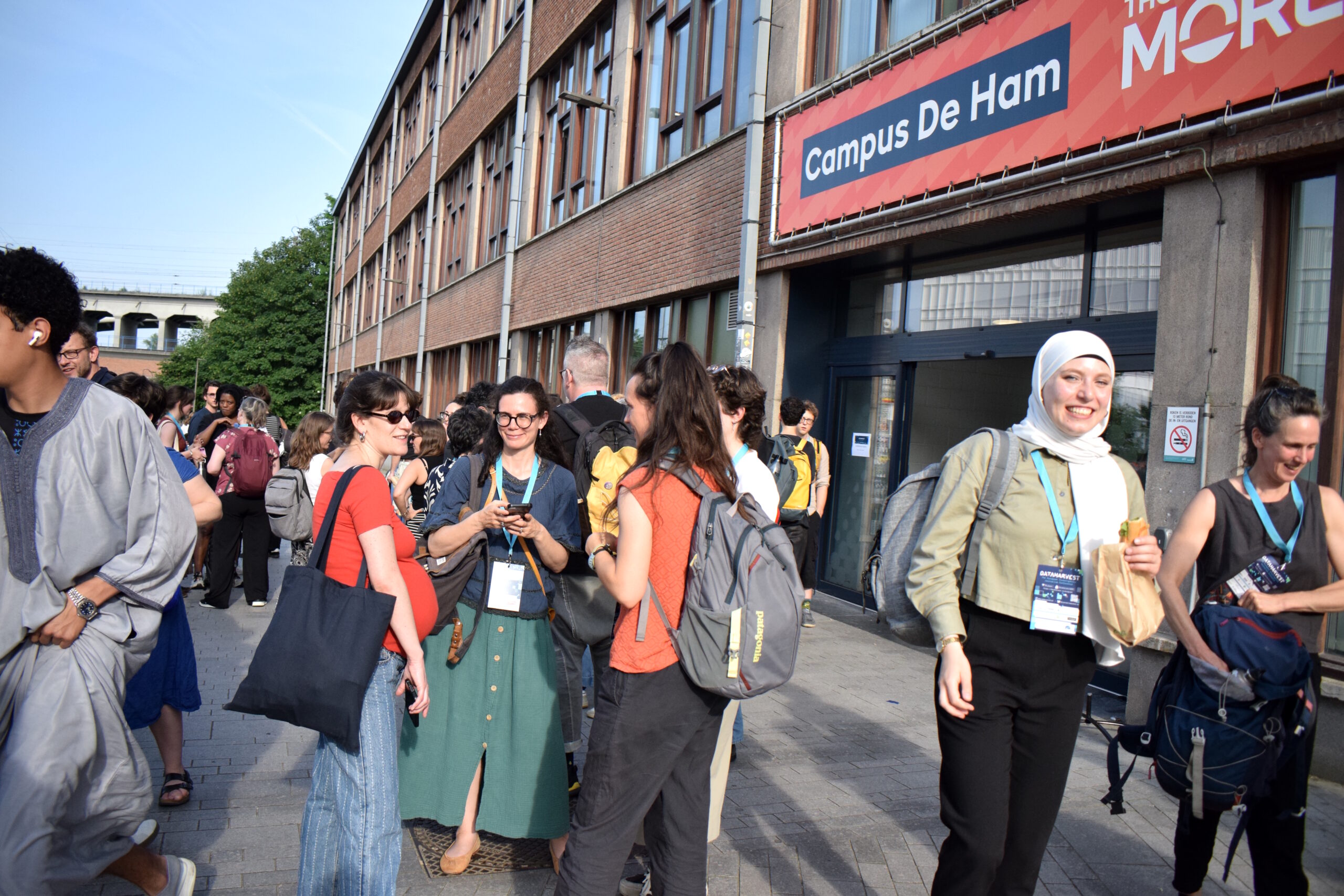
“Robert Gebeloff from the New York Times opened his 2026 Dataharvest panel by saying that this is the best conference in the world”, according to Maximilian Hatzl’s write-up. “I can only agree.”
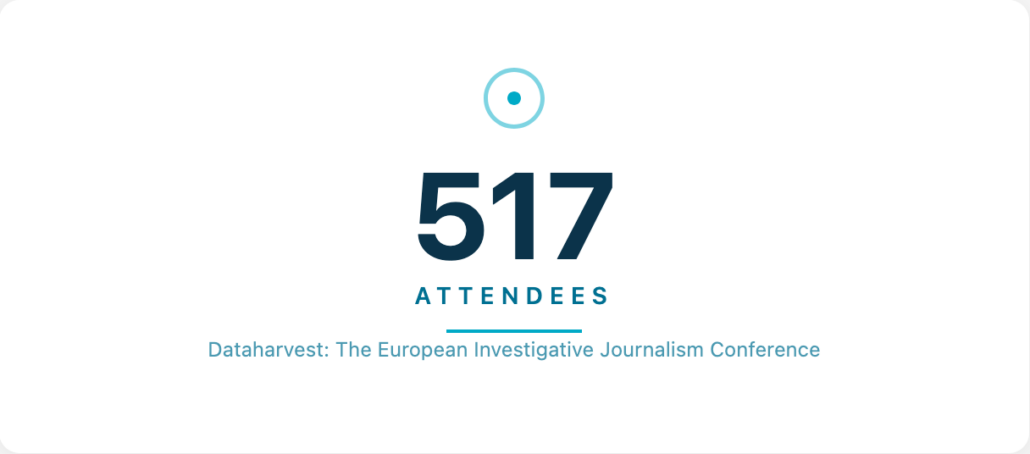
The Arena team were delighted to hear this, alongside the wider praise for this year’s conference; in post-conference reflections, several attendees claim 2026 was our best year yet. At another sold-out Dataharvest, 517 journalists from around the world came to Mechelen amid an unusually hot May to learn, collaborate and advance the field of data and investigative journalism.
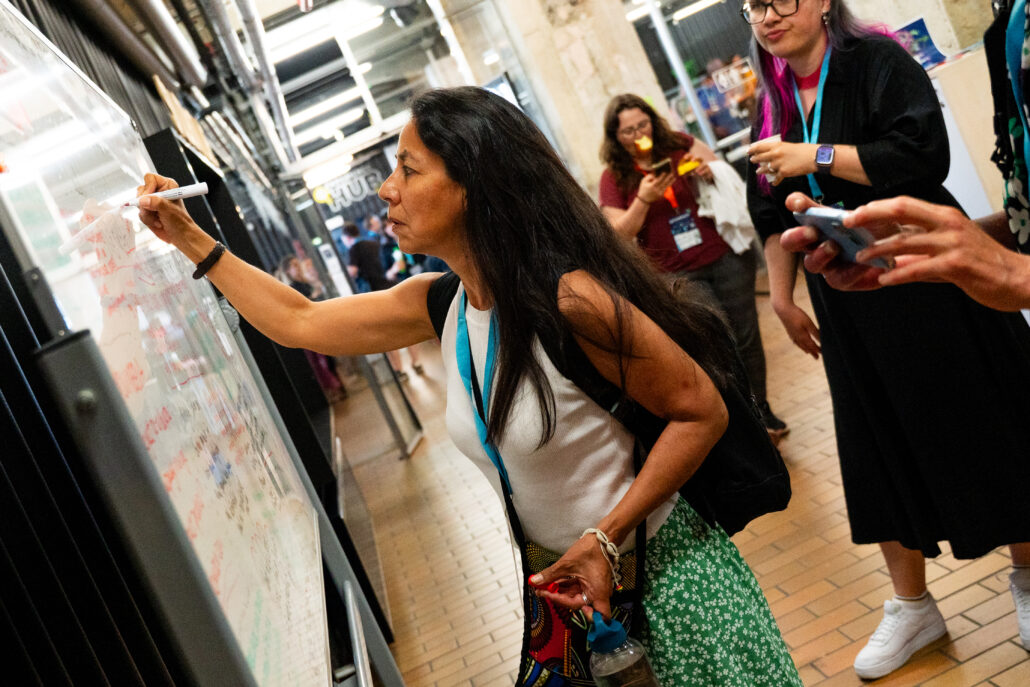
With this in mind, the programme featured a dedicated climate track (incorporating 2026’s Climate Arena conference), and the Dataharvest community moved through it just as reports emerged of a Super El Niño this year. Beyond our dedication to climate journalism, many attendees highlighted the friendly atmosphere, the consistent social justice thread running through all tracks, and strong AI sessions addressing both perils and opportunities as reasons to celebrate the programme.
The Data
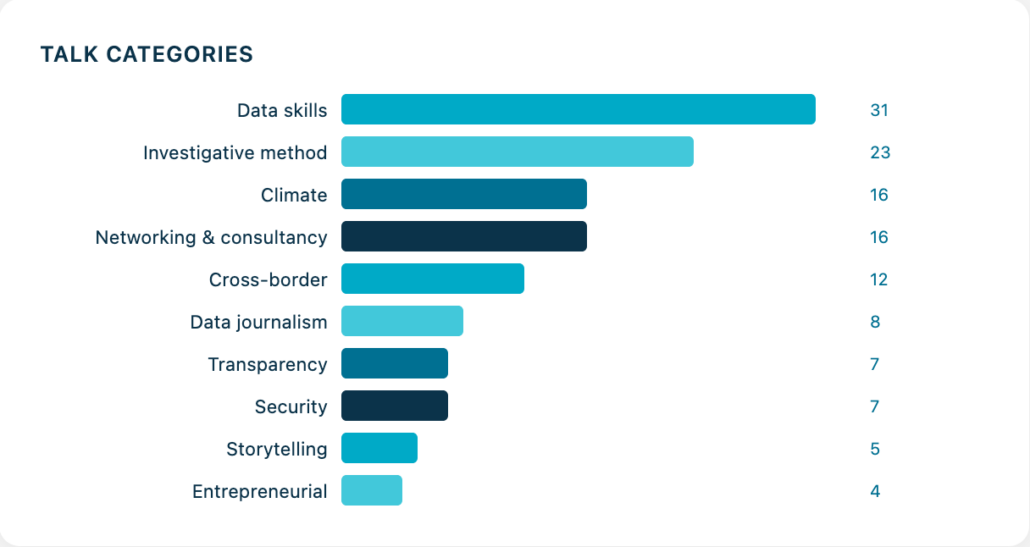
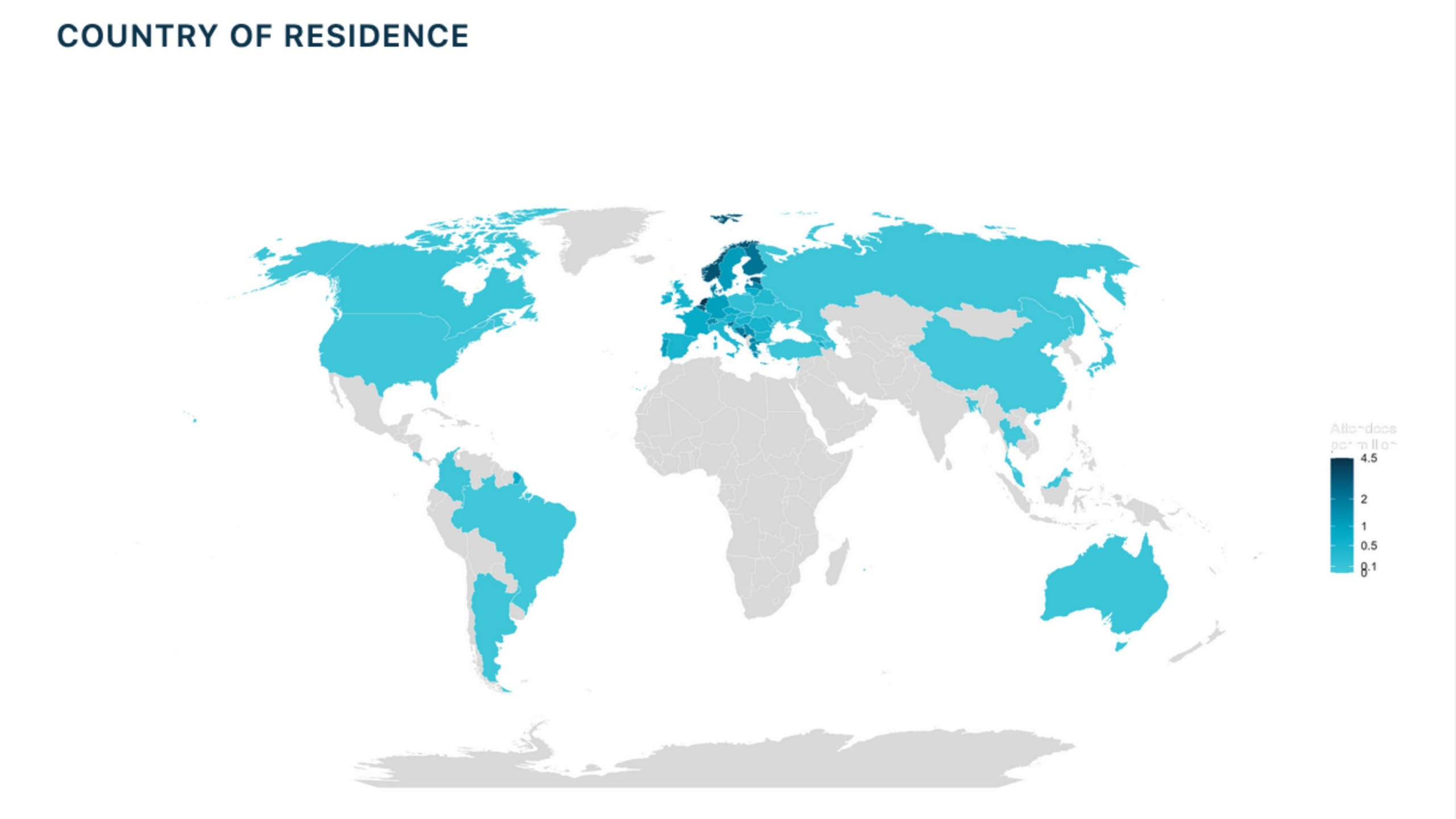
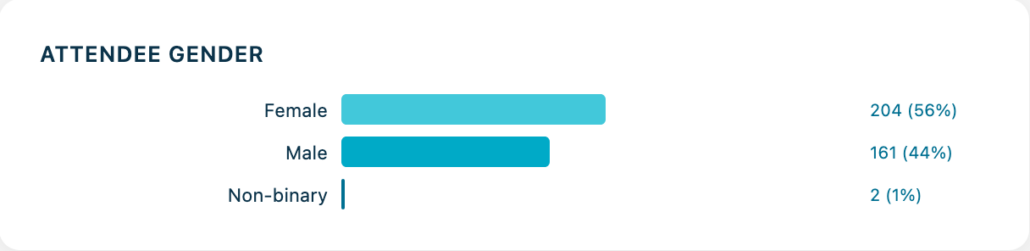
We hosted over 140 presentations, workshops, networking events and support consultations across topics ranging from lawfare investigations to data storytelling, from vibe coding to cross-border collaboration. We can’t cover it all, but the below sample highlights the impact, tools and collaboration lessons Dataharvest 2026 delivered.
Save the date for Dataharvest 2027: 27–30 May, and watch out for the first ticket release at the end of this year.
Visit the Dataharvest 2026 programme, photo gallery, and find data skills presentations, materials, and repositories here.
Impactful investigations
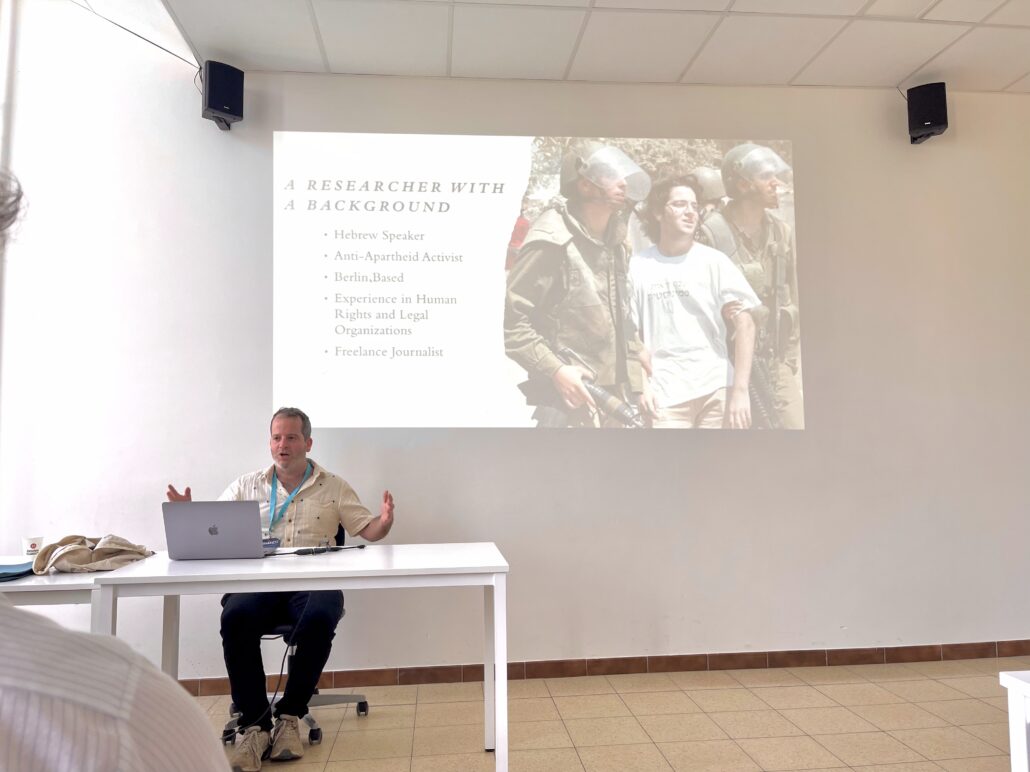
In The Israel Files: Inside a legal war machine of impunity, Stefan Candea and Yossi Bartal presented one of the year’s most revealing investigations. When 300GB of data from the Israeli Ministry of Justice was leaked by ‘Anonymous for Justice’, few took notice. It took Bartal’s particular profile to act on it: his expat freelancer status gave him the legal standing to work around a gag order on journalists in Israel-Palestine, while his activism background and native Hebrew allowed him to interpret the files, particularly the nuanced power dynamics of often informal conversations.
He approached the European Investigative Collaborations network, co-ordinated by Candea, and what they uncovered was extensive: the inner workings of Israel’s Department of Special International Affairs, established in 2010 as a dedicated lawfare unit. Israel’s “legal iron dome” had pursued a 15-year strategy to lobby prosecutors and legal experts inside the ICC, while maintaining a network of friendly law firms across more than a dozen countries, secretly working to soften sentiment towards rights violations. The investigation was published as a searchable database, the ‘Library of Leaks‘, alongside whistleblowing site Distributed Denial of Secrets. Bartal argued this years-long tapestry of data shows the exact path by which, post-October 7, the international community was primed to allow another genocide.
In How to find new angles in reporting on a long-running conflict, Polina Uzhvak from iStories showed how data journalism can enrich stories where audiences are fatigued. Reporting on the Russia-Ukraine war, her team found a single document offering a new angle: a complete list of mobilised men from Tomsk Oblast. Three reporters had under two weeks to work with the names, dates of birth, injuries and deaths of more than 2,100 men.
They revealed key demographic information about how warfare affects the young, and the poor: 4% of those mobilised came from rural areas versus under 0.5% from the capital region; one in five was under 25; someone with higher education was 14 times less likely to be mobilised. Cross-referencing Ministry of Defence hospital records and court documents on desertion revealed at least 13% were wounded and at least 5% have fled the front — in total, a quarter have been killed, are wounded or missing. But Uzhvak stressed that data journalism serves the human story, not the other way around: human impact is still what readers care about most.
Other notable sessions on impact and change-making investigations:
- How we uncovered an international r*pist network through undercover online research
- One pattern, many weapons: Silencing journalists from Gaza to Europe
- How to keep reporting on migration: Strategies from the field
Tools and lessons
In Climate data for non-data journalists, Constanze Bayer and Julia Barthel offered a gentle on-ramp: start with topics you know, find a dataset, and focus on one of three angles: development over time, regional distribution, or differences between groups. “Your best friends in a spreadsheet are group and count”; you’re never analysing a whole dataset, you’re seeking patterns and outliers. Using a traditional news diary, and combining data sources, can open doors too: for example, a heatwave story can incorporate at-risk groups, yield both national and local angles, and often be anticipated using historical data.
In How to Code Anything, Ada Homolova and Johan Schujit offered practical guidance for journalists wanting to vibe code using AI. They recommended using a local agent (one that can also access data you provide it, and read/write files onto your computer — so be careful where and what you give access to) and building something concrete — in this exercise, a snake game — to learn the process. They stressed asking the model questions about how it works: rather than ‘build me a snake game’, ask ‘what steps would I follow to build a snake game?’
Context-building matters more than prompt-crafting, and one key lesson was to start a new chat for each major task, since the whole conversation is re-processed with every query, meaning the more focused the conversation, the more accurate the response (in theory). For journalists, of course, the golden rule is to “never trust output you haven’t read.” An LLM is often simply a mirror — useful for mechanistic tasks like coding, less so for questions of truth.
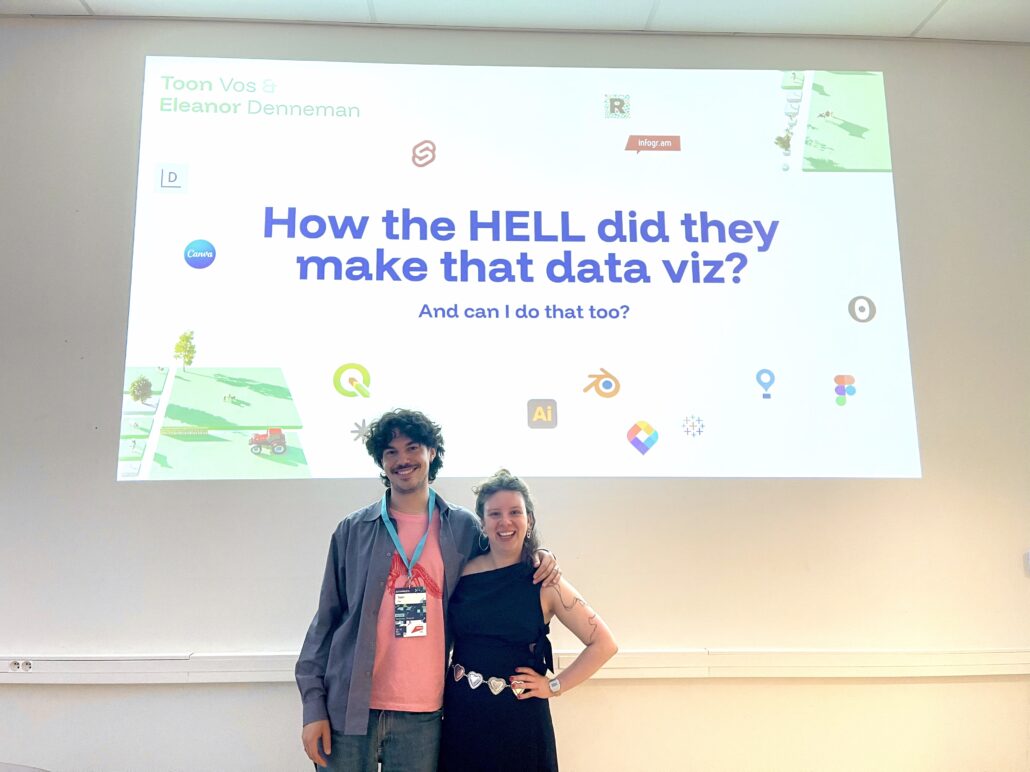
In How the hell did they make that?, Toon Vos and Eleanor Denneman showed how tools like Blender and Svelte can make complex data tangible, and dramatically extend reach. A simple 3D model by Vos showing the land footprint of food production, contextualised with real objects like tractors and cows, generated 2.5 million Reddit views, more than all of his other work combined. While critics argue 3D visualisations can sacrifice accuracy, Vos and Denneman pointed out that this is equally true of a bar chart, which is less accurate than a spreadsheet.
Denneman proved again that data work is often about making human stories accessivle more than pin point precision: her scrollytelling dataviz of the intended destinations of victims of the 2016 Belgium terrorist attacks — plotted in Maptiler with a dozen lines of vibe-coded script — showed how attention-grabbing visuals can tell stories of lives lived, and lost, in a way that resonates.
Other notable sessions on tools and skills:
- How local LLMs can help you with sensitive information: A beginners guide
- Make a publication-ready static map in QGIS
- Data Magic made simple: three ways to crunch numbers in spreadsheets
Collaboration
In a session led by Hazel Sheffield, who runs Arena’s Co-ordinators Without Borders network, journalists gathered to discuss The Perfect MOU. The network has been tackling one of investigative journalism’s newest, and most complex, problems: making collaboration work across different newsroom sizes, nationalities and editorial cultures. In session, the group workshopped a memorandum of understanding for cross-border teams, and a manifesto to help legacy newsroom editors understand those teams’ needs; both documents serving as practical guides for avoiding common barriers and burnout.
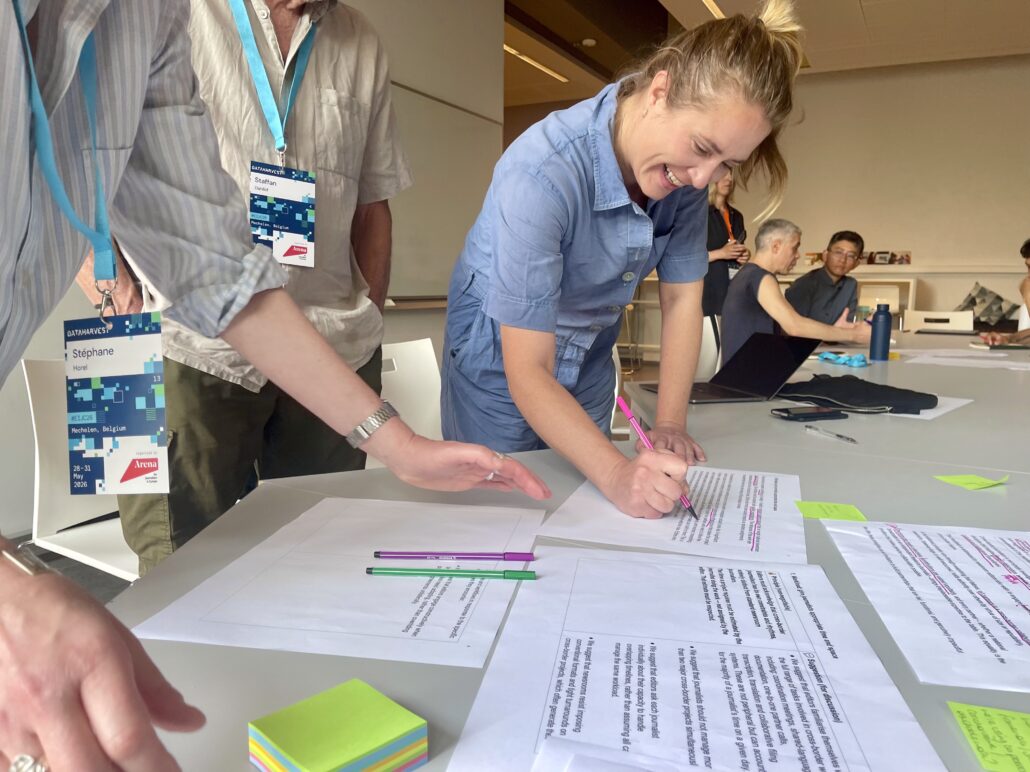
One participant with a legal background cited a fitting refrain from the law community: “Clear agreements, long friendships.” But alongside clear agreements, the key is flexibility. “This is still experimental journalism,” said co-ordinator Stephane Horel. “There will be things that need to change as each project develops.”
Arena’s raison d’etre is building the tools and networks to make these collaborations repeatable. What Dataharvest shows us each year is that journalists know they need structure — but structure lightweight enough not to kill the experimental spirit. That balance is where Arena’s work is crucial.
Other notable sessions on collaboration:
- Navigating the unsaid: How to navigate power dynamics in collaborative investigations
- Investigative journalism on health: networking roundtable
- FOI meetup: Presentation of a cross-border guide
Our work is not only about supporting individual stories, but the infrastructure that makes cross-border investigative journalism sustainable — so that the legal iron domes of the world can be held accountable, one collaboration at a time.